Loading product...
ESPRESSIF SYSTEMS
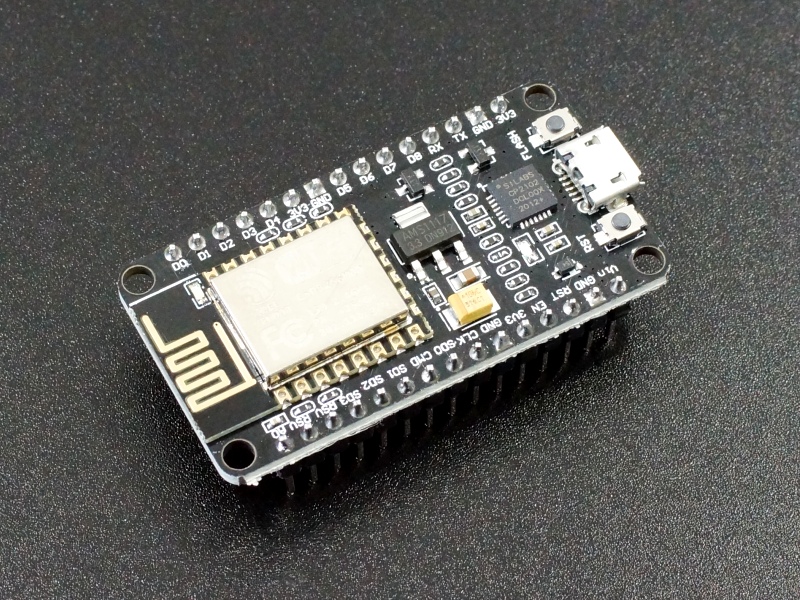
ESP-12E ESP8266 Remote Wireless WiFi Module
★★★★★
0.0/5 (0 reviews)₹139
₹189
26% off
The ESP-12E is a highly integrated 802.11 b/g/n WiFi SoC that provides a complete and self-contained networking solution. It is a mechanical necessity for developers who need to either host an entire application on its internal 32-bit MCU or offload WiFi networking functions from another processor. With its 4MB of SPI Flash and extensive GPIO breakout, the ESP-12E is the core component behind the world-famous NodeMCU development boards.
✓ In Stock (50 available)
1
▪Standalone MCU Capability: The ESP-12E is a mechanical necessity because it doesn't just provide WiFi; its integrated Tensilica L106 processor can run complex code independently, eliminating the need for an external Arduino in small-scale projects.
▪Extended GPIO Access: Unlike earlier modules, the 12E breaks out 22 pins, including additional SPI pins (GPIO 6-11), which is a mechanical necessity for interfacing with multiple sensors, OLED displays, and SD cards simultaneously.
▪Advanced Power Management: Designed for the "always-on" world, its ability to wake up and transmit packets in <2ms makes it a mechanical necessity for low-latency sensor nodes that must conserve energy.
▪Standard-Ready Protocols: Includes a full TCP/IP stack with support for IPv4, TCP/UDP, and HTTP/FTP, ensuring it is a mechanical necessity for cloud-connected applications like Blynk, ThingSpeak, or AWS IoT.
▪Robust Shielding: Features a metal EMI shield that protects the internal circuitry from high-frequency interference, a mechanical necessity for industrial environments or crowded PCB designs.
Core Processor
ESP8266EX (32-bit RISC CPU up to 160MHz).
Memory
4MB (32Mbit) External SPI Flash.
WiFi Standard
IEEE 802.11 b/g/n (2.4GHz - 2.5GHz).
Operating Voltage
3.0V to 3.6V (3.3V recommended).
Power Consumption
~80mA average (Active), <10µA (Deep Sleep).
Interfaces
UART, SPI, I2C, I2S, PWM, and 10-bit ADC.
Output Power
Up to +20dBm in 802.11b mode.
Certifications
FCC / CE / RoHS compliant.