Loading product...
Arduino
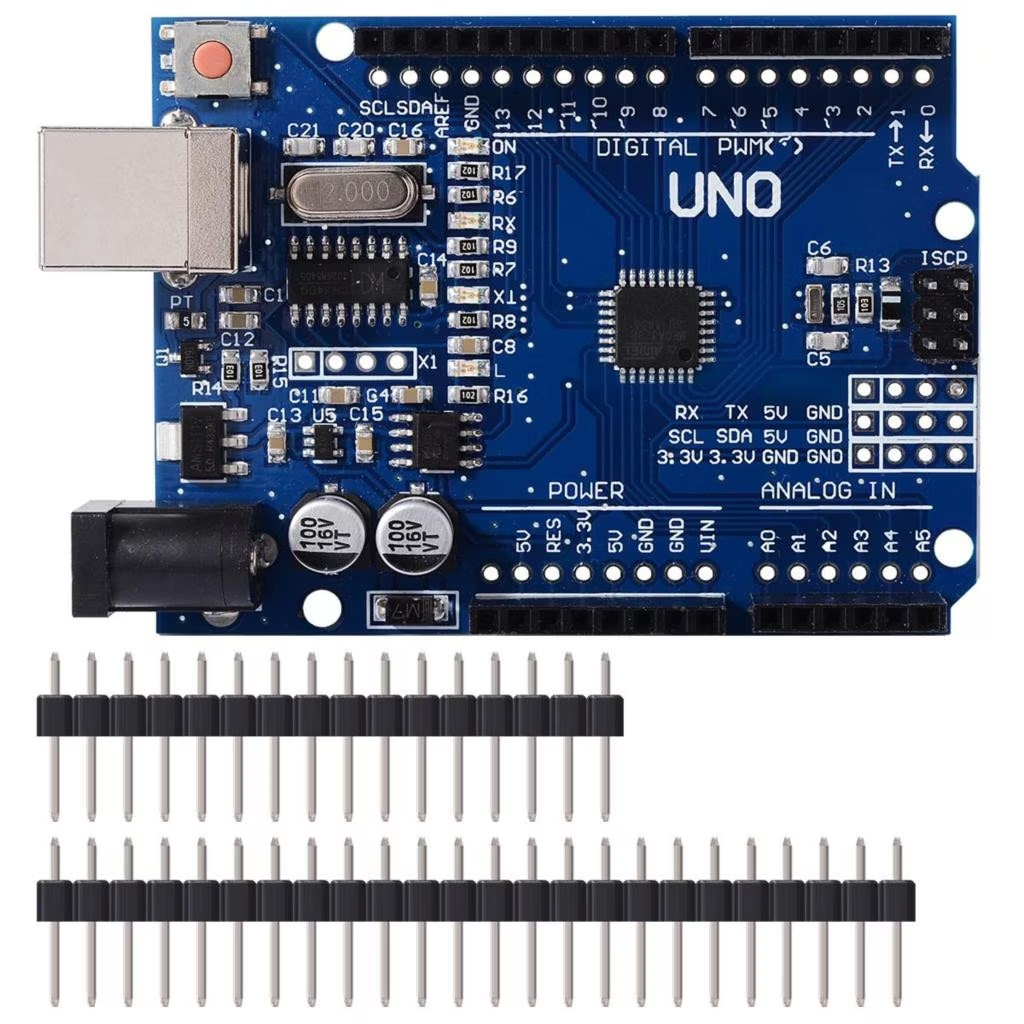
Arduino Uno R3 Compatible Development Board (CH340G) | Arduino Uno (Clone - CH340)
★★★★★
0.0/5 (0 reviews)₹399
₹589
32% off
The Arduino Uno Clone is the industry standard for 8-bit embedded development. It is a mechanical necessity for robotics, automated home systems, and STEM education, featuring the powerful ATmega328P microcontroller. This version utilizes the CH340G USB-to-Serial chip, ensuring a stable and affordable connection to your PC. With its standardized pinout, it is the top-rated choice for students and engineers.
✓ In Stock (30 available)
1
▪Standard Shield Compatibility: The Uno Clone is a mechanical necessity because it maintains the exact physical footprint of the original R3, allowing you to "stack" specialized expansion boards (shields) for instant hardware upgrades.
▪Robust 5V Logic: Operates natively at 5V, a mechanical necessity for driving relays, high-torque servos, and ultrasonic sensors that require a strong signal without level-shifting.
▪Replaceable DIP Chip: Many clones feature the socketed ATmega328P-PU, a mechanical necessity for classroom environments where a damaged chip can be replaced in seconds without throwing away the entire board.
▪Universal USB Connectivity: Features a full-sized USB Type-B port, a mechanical necessity for durability in heavy-use environments, providing a secure and stable connection during long debugging sessions.
▪Massive Library Support: As the most popular board in history, it is a mechanical necessity for rapid development, as nearly every electronic sensor on the market has a pre-written Arduino library ready to go.
Microcontroller
ATmega328P (8-bit AVR).
USB-Serial Chip
CH340G.
Operating Voltage
5V
Input Voltage (Limit)
6V to 20V (7V–12V recommended).
Digital I/O Pins
14 (including 6 PWM outputs).
Analog Input Pins
6 (10-bit resolution).
Flash Memory
32 KB (0.5 KB used by bootloader).
Clock Speed
16 MHz.